
Small sample volumes
Compact experiments are practical when membrane material or feed solution is limited.
A practical centrifugal approach for low-volume membrane screening using standard laboratory centrifuges.
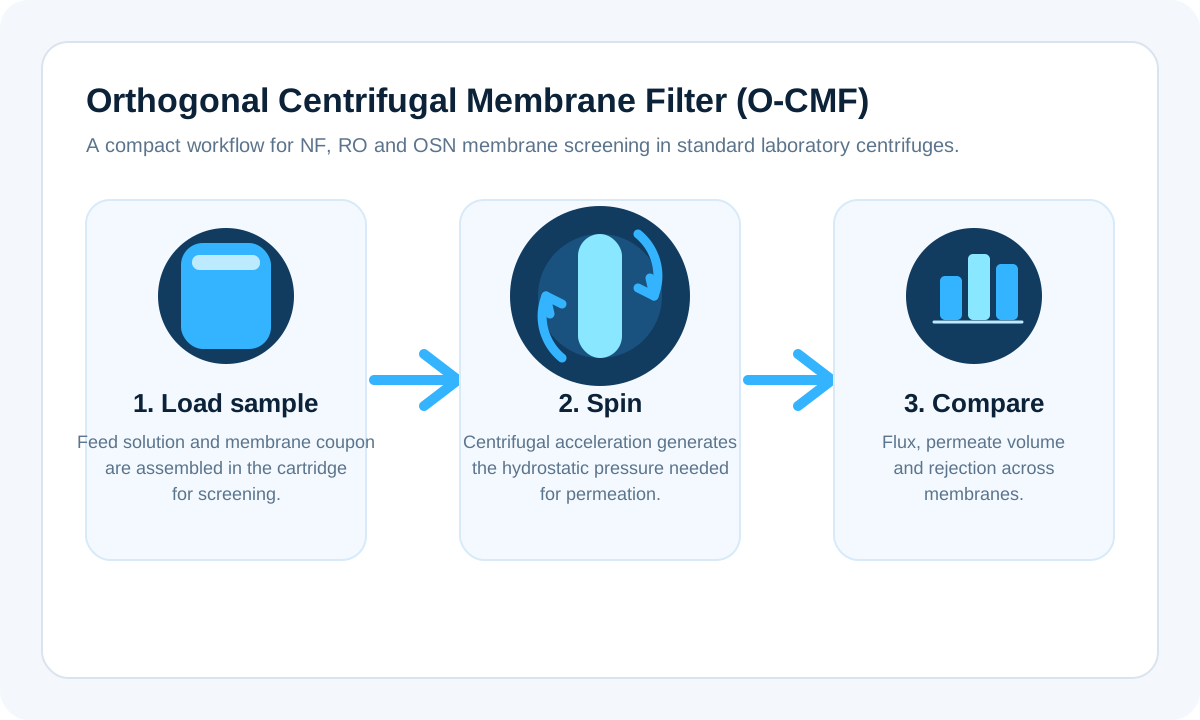
In the O-CMF approach, a flat membrane disc (20 mm outer diameter, 1.45 cm² effective area) is mounted inside a compact cartridge and exposed to a centrifugal field. When the assembly is spun in a fixed-angle rotor, centrifugal hydrostatics generate the transmembrane pressure needed to drive liquid through the membrane. This is a dead-end filtration configuration: feed is loaded on one side of the membrane, and permeate passes through to a separate collection chamber.
Concentration polarisation is managed without mechanical agitation. The centrifugal acceleration field induces natural convection near the membrane surface — the denser concentrated layer is continuously disrupted by centrifugal buoyancy, refreshing the boundary layer throughout the run.
This makes it possible to perform membrane screening in a standard laboratory centrifuge rather than a full pump-driven filtration system. The workflow is especially useful when feed volume is limited or when many membrane candidates must be compared rapidly.
The approach is relevant to nanofiltration (NF), reverse osmosis (RO) and organic solvent nanofiltration (OSN), where faster generation of comparable performance data can help accelerate process development.
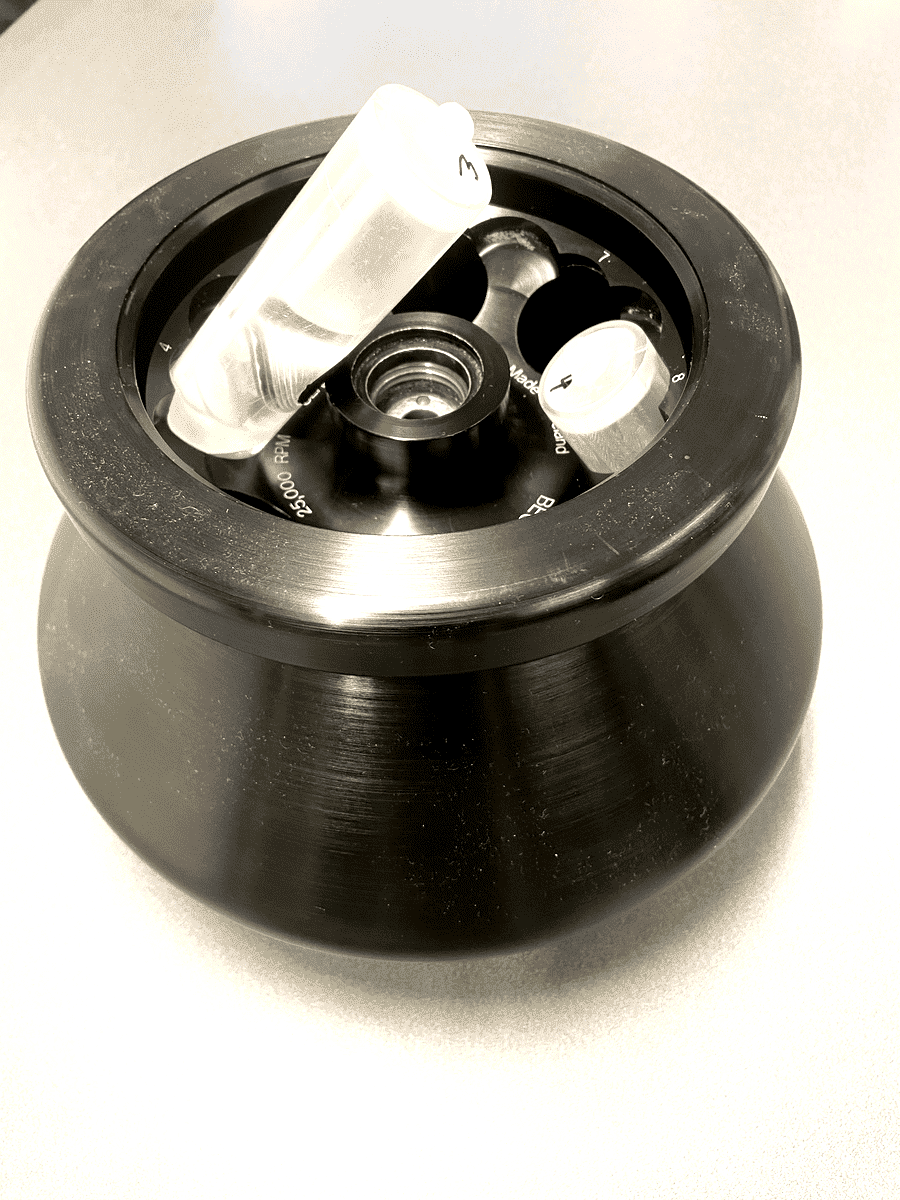
CentrivaLab cartridges are placed directly into a fixed-angle rotor without any additional hardware. The compact geometry is designed to fit standard centrifuge tube positions.
Compact experiments are practical when membrane material or feed solution is limited.
The centrifugal acceleration field induces natural convection near the membrane surface, continuously disrupting the concentration boundary layer — no mechanical stirring required.
Material selection can be adapted for solvent compatibility, including PEEK, PAEK and PPS for OSN-oriented work.
Tools: the CP Calculator estimates the concentration polarisation of your solute (and of a dilute tracer) in either cartridge at a given pressure and flux; the Rotor Speed Calculator gives the rpm for a target mean pressure over a run; the device comparison puts the O-CMF side by side with a stirred cell and a spiral-wound module.